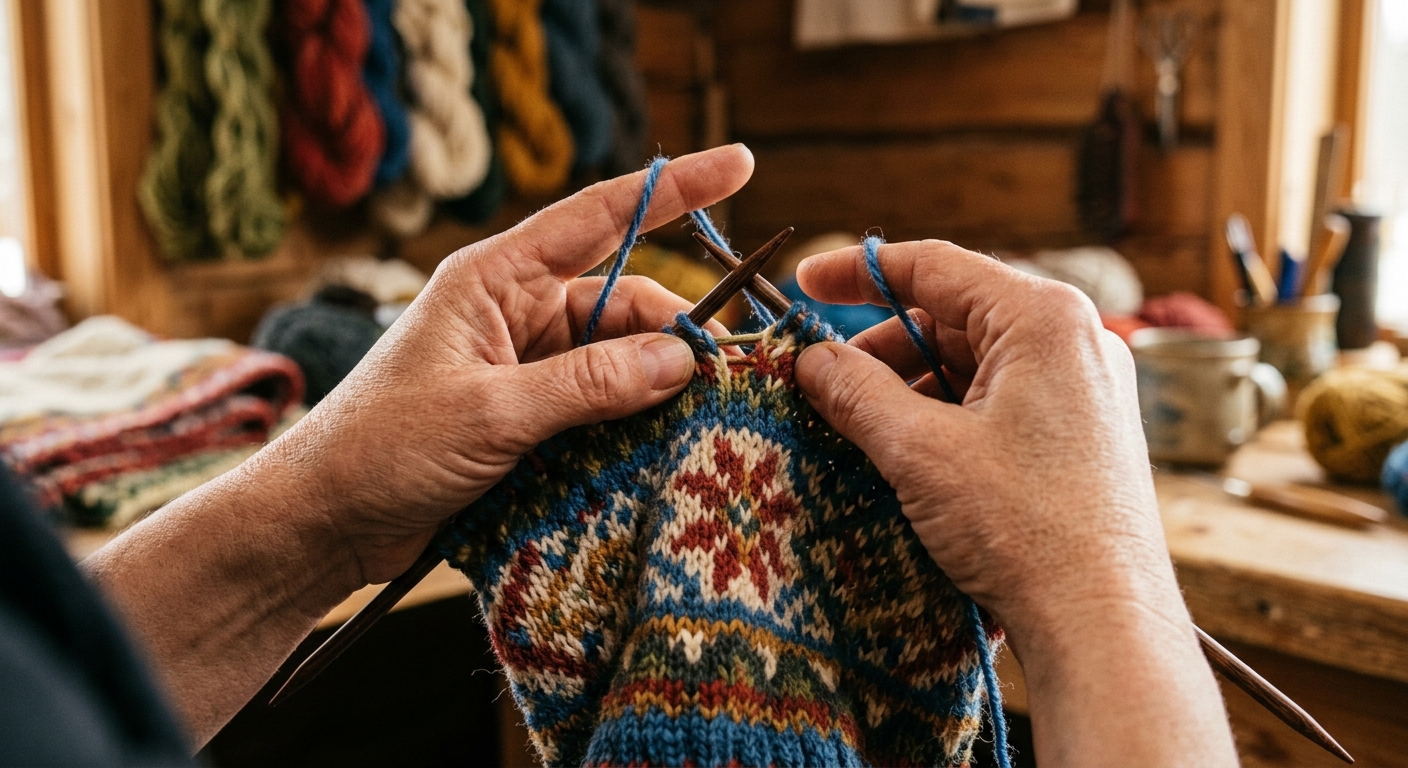
traditionknittingestonia
The Art of Estonian Hand Knitting: A Tradition Worth Preserving
Discover the rich history of Estonian hand knitting, from ancient patterns to modern interpretations of this beloved craft.
Read More→
If you have ever tried a real alpaca sweater, you remember it. The fabric drapes lightly across your shoulders, but the warmth comes through almost immediately, like wearing a quiet, dry hug. People who switch from sheep wool to alpaca rarely go back, and that is not just romance talking. Alpaca fiber has a list of properties that, on paper, read like a fabric engineer's wish list.
At our studio in Loksa, Estonia, we have been knitting with alpaca for years, and the questions our customers ask have stayed remarkably consistent. Is alpaca actually warmer than sheep wool? Will it itch? How does it hold up? This guide answers those questions, explains where alpaca's natural advantages come from, and helps you choose a piece that earns its place in your closet for a decade or more.
Alpacas live high in the Andes, where overnight temperatures can fall well below freezing and the midday sun pushes the same animals into real heat. Over thousands of years, their fleece evolved to handle that swing. The fiber itself is finer than most sheep wool, usually measuring between 18 and 30 microns, and the surface scales are smaller and flatter. That means less of the prickly, scratchy feel you might remember from a heavy farmhouse pullover.
The structural difference that matters most is invisible to the eye. Each alpaca fiber has a hollow or semi-hollow core, almost like a microscopic straw. Sheep wool, by comparison, is mostly solid. Those hollow chambers trap still air, and trapped air is the single best insulator in textiles. That is why a thinner, lighter alpaca knit can keep you warmer than a much heavier sheep wool sweater of the same gauge.
Fiber experts often quote a striking figure: alpaca offers up to seven times the warmth of sheep wool by weight. The number varies with grade and knit construction, but the principle is solid. The hollow core gives alpaca a remarkable warmth-to-weight ratio, and that is the property your shoulders and back actually notice on a cold Estonian morning.
There is a second reason alpaca punches above its weight in winter. The fiber also breathes well, releasing moisture vapor before it can cool against your skin. A traditional sheep wool sweater can feel clammy after a brisk walk in the cold. A good alpaca knit tends to stay dry, regulating its temperature with you instead of against you. For anyone who walks to work, commutes by bike, or spends long stretches outdoors, that difference shows up by the end of the day.
The short answer is yes, in most cases. Sheep wool naturally contains lanolin, a waxy grease that protects the fleece on the animal. Lanolin is the main trigger for what many people call a wool allergy, though a true allergy to wool protein is rare. Alpacas do not produce lanolin at all. Their fleece is also free of the heavier coarse fibers that line a sheep's outer coat, the ones most responsible for that pinprick itch around the neck.
For customers who have spent years convinced they simply could not wear wool, alpaca is often the piece that changes their mind. We see this often when someone tries one of our handmade alpaca sweaters or hats for the first time, especially on bare skin near the collar. The smoother scale structure plus the absence of lanolin makes alpaca a far gentler choice for sensitive skin, eczema-prone wearers, and children.
Soft and warm are easy to sell. Long-lasting is harder, and it is where alpaca really earns its price tag. The fiber is naturally strong, partly because it lacks the brittle outer cuticle of some sheep breeds and partly because hand spinning preserves the fiber's natural length. A well-made alpaca sweater, washed gently and stored carefully, can stay in wardrobe rotation for ten to fifteen years. We have customers who still wear pieces we knitted for them more than a decade ago.
A few simple habits stretch that lifespan even further:
Alpaca also resists pilling more stubbornly than many softer wools, because its fibers grip each other tightly during spinning. The result is a knit that still looks like itself after a hundred wears.
Alpacas are gentle on the land. Their padded feet do not chew up pasture the way sheep hooves can, and they crop grass without pulling the roots. Most alpaca fleece is harvested once a year through shearing that does not harm the animal, and the fiber itself is fully biodegradable. Compared with the plastic-based microfibers that fill so much of fast fashion, alpaca wool is one of the cleanest, lowest-impact materials a knitter can work with.
Pair that with handmade craftsmanship and the math gets even better. A single hand-knit alpaca sweater replaces several lower-quality pieces over the same number of years. Fewer garments, made with care from a fiber the planet actually approves of, is the slow fashion case in one sentence.
If you are new to alpaca, start with something that touches the skin where you will notice it most: a sweater, a snood, or a pair of mittens. The first wearing is usually the moment people understand the difference. Pay attention to the gauge as well. A tighter knit in a lighter weight gives you the famous alpaca warmth without the bulk. Loose, chunky knits feel beautiful too, but the slimmer pieces tend to slot into more outfits, year after year.
Color is the last thing to think about, since alpaca takes natural dyes and undyed shades equally well. Many of our customers gravitate toward the warm browns, soft greys, and creamy whites that mirror the animals themselves, partly because those tones never date and partly because they showcase the fiber's natural luster.
If you would like to feel the difference yourself, browse our handmade Estonian alpaca knitwear at www.vainowear.com/en/products. Each piece is knitted by hand in Loksa, made to last, and chosen by the people who love them most.
Discover the rich history of Estonian hand knitting, from ancient patterns to modern interpretations of this beloved craft.
Read More→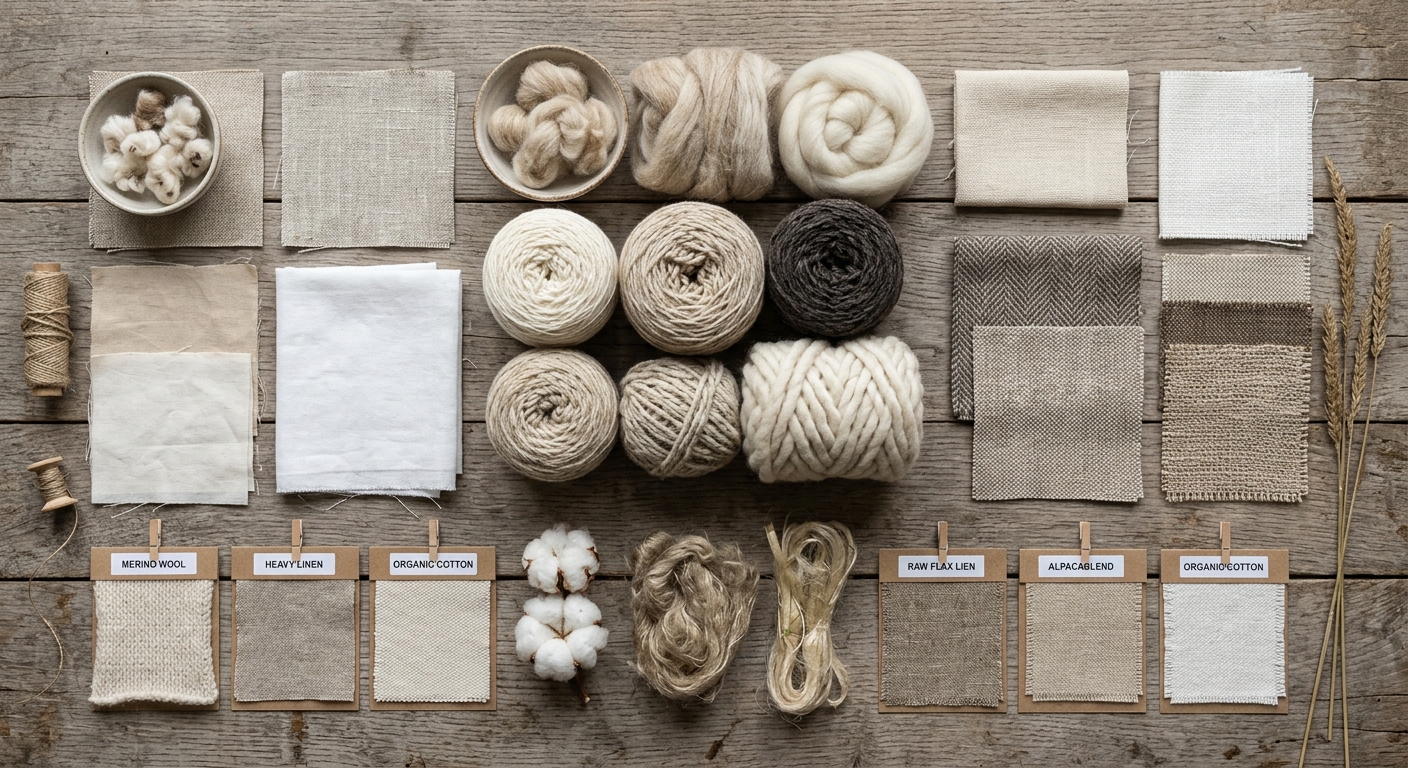
A complete guide to the natural fibers we use at Vaino Wear — their properties, benefits, and best uses.
Read More→