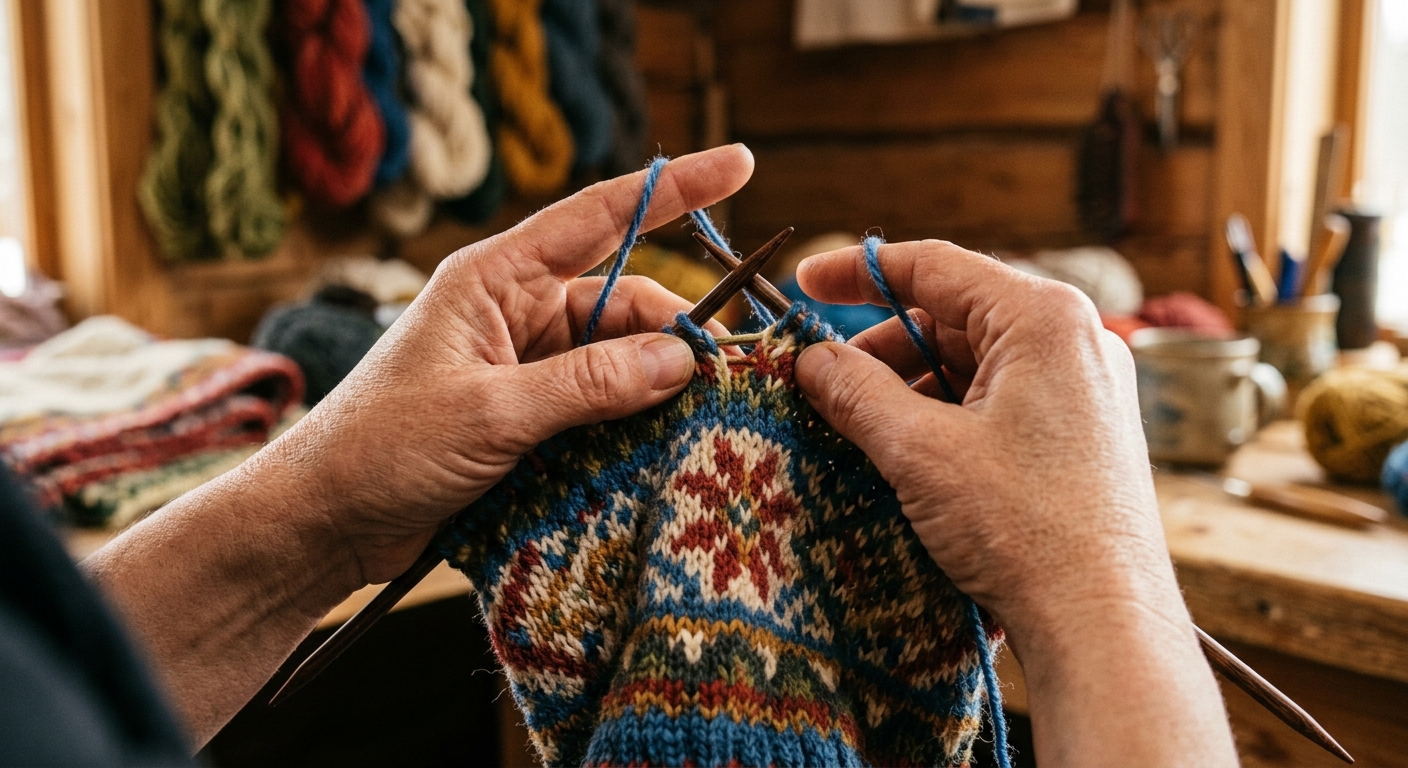
traditionknittingestonia
The Art of Estonian Hand Knitting: A Tradition Worth Preserving
Discover the rich history of Estonian hand knitting, from ancient patterns to modern interpretations of this beloved craft.
Read More→
There is a moment every wool sweater owner knows: you pull your favorite knit out of the drawer at the start of the season, and it either looks exactly as it did the day you bought it, or it has shrunk, pilled, or lost its shape. The difference almost never comes down to the quality of the wool. It comes down to how the sweater was cared for.
Learning how to care for wool sweaters properly is one of the simplest ways to protect an investment in quality clothing. This is especially true for handmade pieces, where every stitch represents real time and skill. At Vaino Wear, we knit our sweaters, mittens, hats, and socks by hand in Loksa, Estonia, using natural merino and alpaca wool, and we hear the same question often: how do I make this last? Below is everything you need to know, from daily habits to deep cleaning and long-term storage.
Wool is not like cotton or synthetic fiber, and treating it the same way is the fastest route to disappointment. Each wool fiber is covered in microscopic scales, similar in structure to human hair, and those scales are what make wool both remarkably resilient and somewhat delicate at the same time.
Under heat, moisture, and agitation, those scales can lock together permanently. That is what shrinking and felting actually are: not the wool disappearing, but its fibers binding into a denser, smaller mass. Once felted, wool cannot be reversed back to its original state. This is why a wool sweater that goes through a hot washing machine cycle rarely survives intact.
On the positive side, those same fiber scales give wool its natural odor resistance, breathability, and ability to regulate temperature. Wool absorbs moisture vapor from your skin and releases it into the air, which is why a merino wool sweater feels comfortable in a wide range of temperatures and does not need washing after every wear. Understanding this structure is the foundation for every care decision that follows.
Much less often than you think. One of the most common mistakes people make with wool sweater care is washing after every single wear, the way they might with a cotton t-shirt. Wool's natural lanolin content and antibacterial properties mean it resists odor and dirt far better than other fibers.
In most cases, airing a sweater out overnight on a hanger or a chair back is enough to refresh it between wears. Save washing for when the sweater is visibly soiled, has picked up a strong smell, or after roughly four to six wears, depending on how often you wear it and how close it sits to your skin. A merino wool base layer worn daily will need more frequent washing than a chunky cardigan worn over other clothing.
This is one of the quiet advantages of choosing wool over synthetic fibers. Less washing means less wear on the garment, less water and energy used, and a piece that genuinely lasts longer in your rotation.
Hand washing is the gold standard for how to care for wool sweaters, and it takes less time than most people expect.
If hand washing feels intimidating, many modern washing machines have a dedicated wool cycle that mimics this gentle, low-agitation process. Always check the care label first, and when in doubt, hand wash. It is the safest option for a hand knitted sweater or any piece you consider an investment.
More wool sweaters are damaged in drying and storage than in washing itself. Never hang a wet wool sweater. The weight of the water will stretch the fibers permanently, leaving you with a garment that has grown two sizes in the shoulders and hangs strangely everywhere else.
Instead, lay the sweater flat on a clean, dry towel. Gently reshape it to its original dimensions, smoothing the sleeves, shoulders, and hem. Roll the towel loosely to press out excess water, then lay the sweater on a fresh dry towel to air dry completely, away from direct sunlight and heat sources like radiators. This can take a day or two, so plan accordingly if you are washing something you need soon.
For long-term storage, always fold wool sweaters rather than hanging them. A hanger creates pressure points at the shoulders that stretch out over time, leaving those telltale hanger bumps. Store folded sweaters in a drawer or on a shelf, ideally with a cedar block or lavender sachet nearby to deter moths naturally, without resorting to harsh chemical mothballs. Before packing wool away for the season, make sure it is completely clean. Moths are drawn to the oils and residue left by skin contact, not to the wool itself, so a properly washed sweater is much less likely to attract them over a summer in storage.
Pilling, those small fuzzy balls that form on the surface of a sweater, is a natural result of friction from wear, not a sign of poor quality. In fact, natural fibers like merino wool and alpaca often pill less than synthetic blends because the fibers are longer and more resilient. When pills do form, a wool comb or a fabric shaver used gently in one direction will lift them away without damaging the knit underneath.
For snags, resist the urge to pull the loose thread. Instead, use a blunt needle or crochet hook to gently work the slack back through to the inside of the garment. A small snag caught early rarely turns into a real problem, but a stretched or cut thread can unravel further if ignored.
Rotating your sweaters rather than wearing the same one for days in a row also extends their life significantly. Giving wool at least a day of rest between wears allows the fibers to recover their natural shape and elasticity, which is part of what makes wool so much more durable over time than it initially appears.
It is fair to ask whether all this effort is worth it, especially when fast fashion offers cheaper alternatives. The honest answer is that a well cared for wool sweater, particularly a hand knitted one, will simply outlast almost anything mass produced. Natural fibers like merino and alpaca wool are biodegradable, renewable, and built to be worn for decades rather than a single season, which is part of why slow fashion and sustainable wardrobes keep circling back to wool as a foundation piece.
At Vaino Wear, every sweater, hat, mitten pair, and pair of socks is still made by hand, the traditional Estonian way, using yarns chosen for both softness and longevity. That craftsmanship deserves the small amount of care outlined above. A few minutes of gentle washing and thoughtful storage each season is a fair trade for a garment that can genuinely become a part of your wardrobe for years, not months.
If you are ready to add a piece of handmade Estonian knitwear to your collection, one that will reward exactly the kind of care described here, explore the full range of merino and alpaca wool sweaters, mittens, hats, and socks at vainowear.com/en/products.
Discover the rich history of Estonian hand knitting, from ancient patterns to modern interpretations of this beloved craft.
Read More→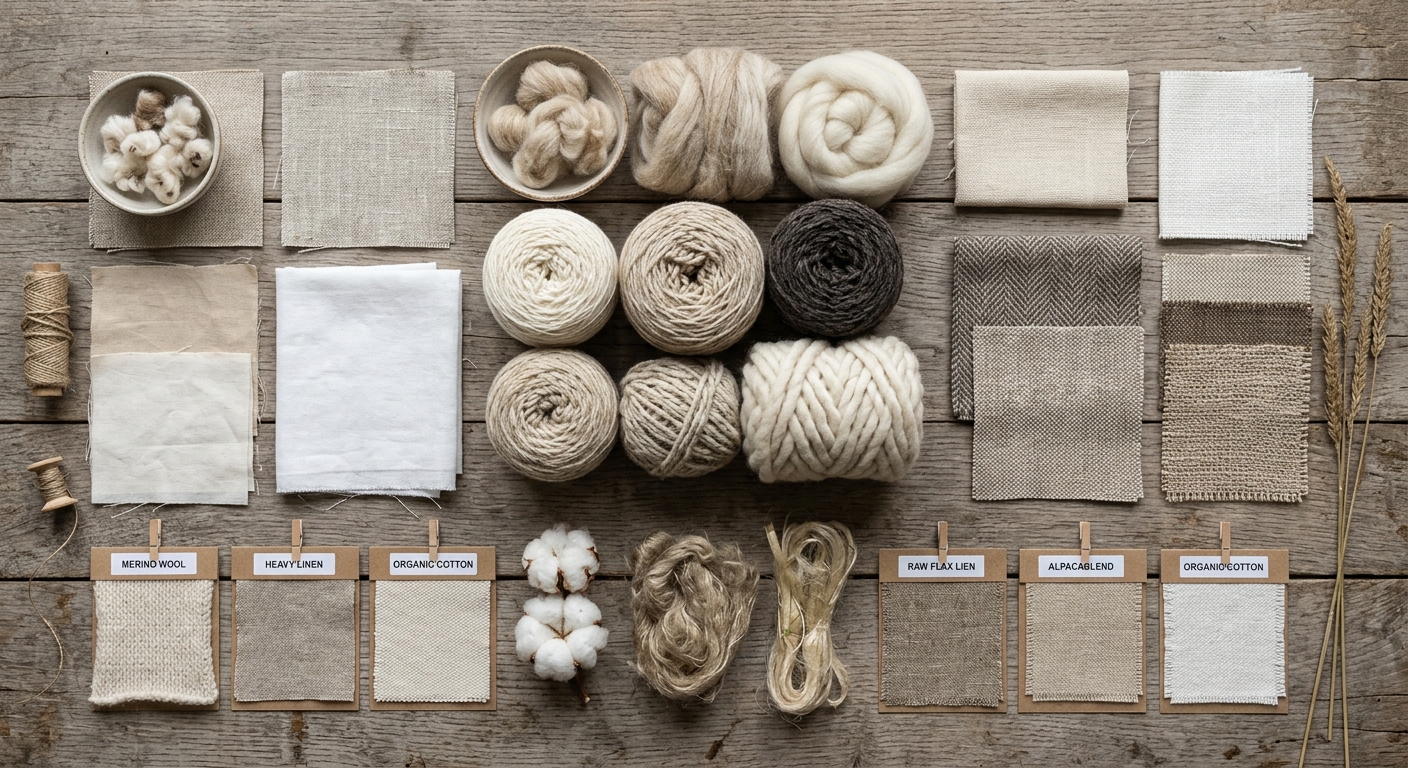
A complete guide to the natural fibers we use at Vaino Wear — their properties, benefits, and best uses.
Read More→