traditionknittingestonia
The Art of Estonian Hand Knitting: A Tradition Worth Preserving
Discover the rich history of Estonian hand knitting, from ancient patterns to modern interpretations of this beloved craft.
Read More→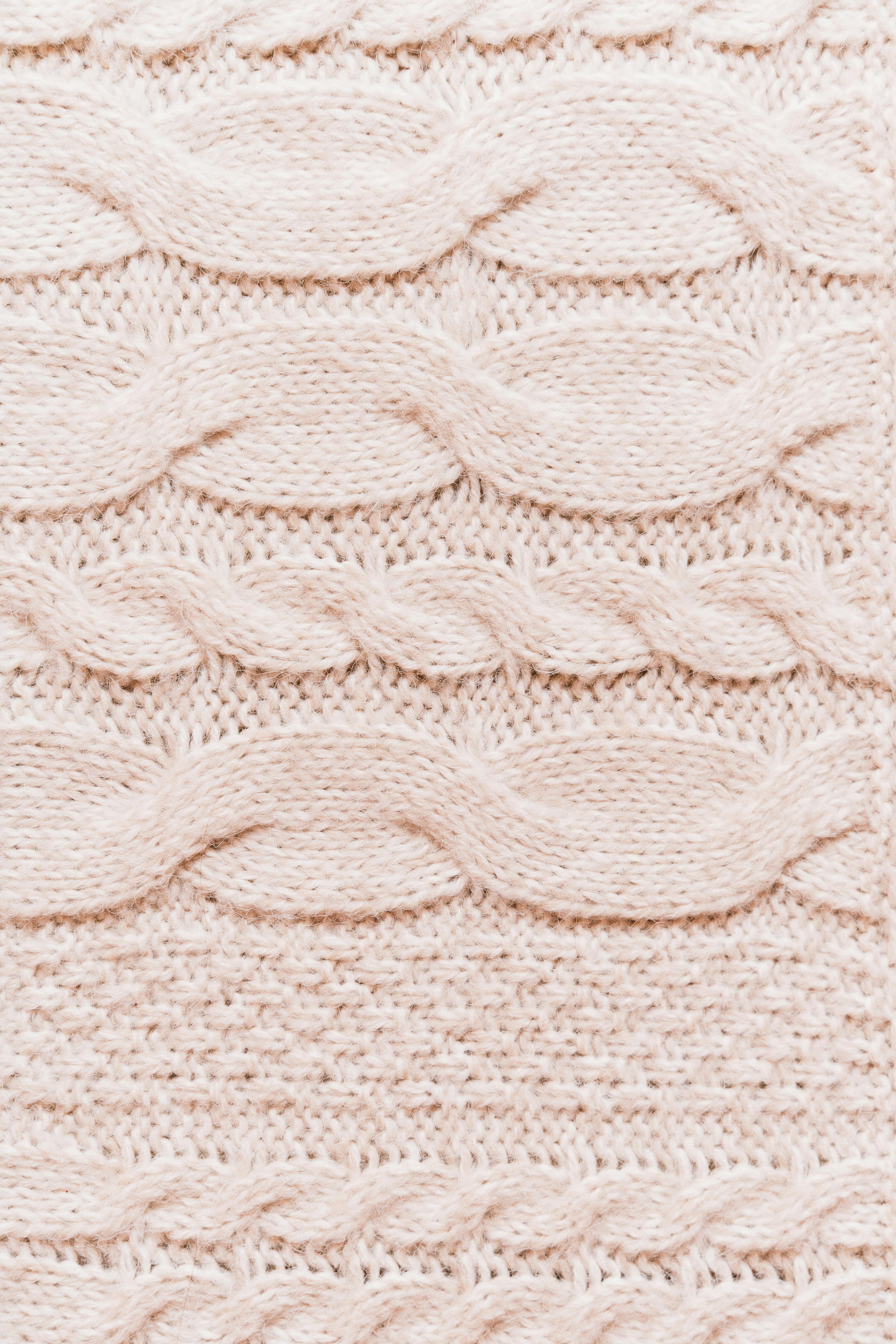
The phrase gets used so often that it has started to lose its meaning. Sustainable wool clothing is not just anything made from an animal fiber instead of plastic. It refers to garments made from wool that was raised, sheared, and processed in a way that protects the land, treats the sheep well, and produces a fabric strong enough to outlive a single season of wear.
That last part matters more than people realize. A sweater that pills after three washes and gets thrown out by January is not sustainable, no matter what the fiber label says. Sustainability lives in the whole life cycle of the garment: how it was made, how long it lasts, and what happens to it when it eventually wears out.
Fast fashion works on a simple trick: make clothes cheap enough that nobody minds replacing them every few months. The average synthetic sweater is built to a price point, not a lifespan. It sheds microplastics in the wash, loses its shape within a year, and ends up in a landfill where it will sit for centuries because synthetic fibers do not biodegrade.
Wool works against that model by design. It is naturally elastic, so a well-made wool sweater keeps its shape wash after wash. It resists odor without needing to be laundered constantly, which means less water and energy use over its lifetime. And at the end of its life, untreated wool breaks down in soil in a matter of months rather than decades. Choosing wool over synthetic knitwear is one of the simplest wardrobe decisions with a genuinely measurable environmental difference.
Not all wool is equal, and this is where labels actually earn their keep. Two certifications are worth learning to recognize:
Beyond certification stamps, traceability is the real prize. A brand that can tell you which farm or region its wool came from, and how it was spun and dyed, has nothing to hide. That transparency is a good proxy for quality even before you touch the fabric.
One of the more heartening trends this year is the return of visible mending, patching a worn elbow or a moth hole with contrasting yarn instead of hiding the damage or tossing the piece. It flips the old idea that a repaired sweater looks worse than a new one. A darned elbow on a well-loved wool sweater tells a story; a pilled synthetic one just looks tired.
Slow fashion is really this idea applied to your whole wardrobe: buy fewer pieces, buy them well made, and expect to keep them for years, mending them along the way. Wool is uniquely suited to this approach because it can genuinely be repaired. Felted patches, re-knitted cuffs, and reinforced elbows are all realistic fixes on a hand knitted wool garment in a way they simply are not on a $15 acrylic sweater.
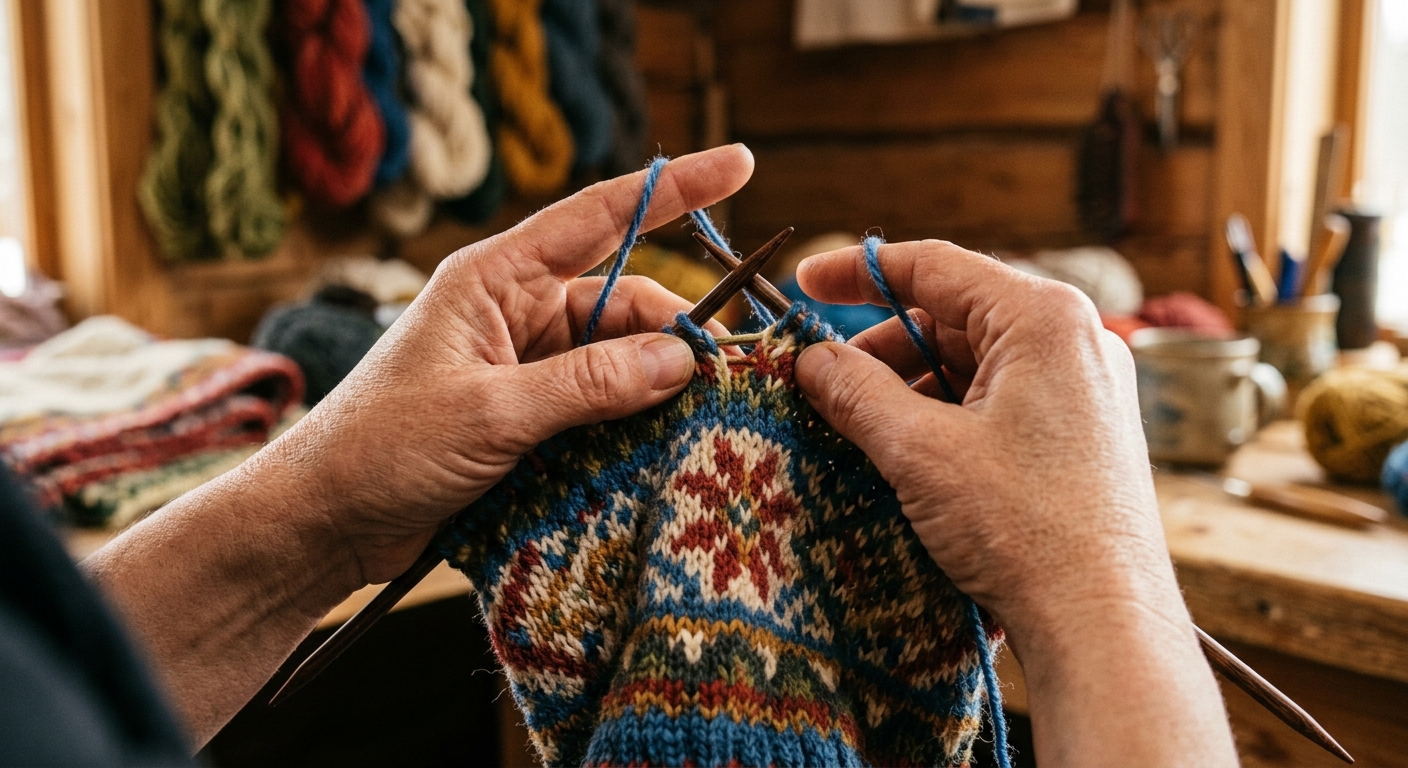
Estonia has a knitting tradition that predates the concept of fast fashion by centuries. In small coastal and island communities, wool sweaters, mittens, and socks were knitted by hand because that was the only way to make warm winter clothing that would actually survive a Baltic winter, and survive it for a family, not just one wearer.
At Vaino Wear, we knit our sweaters, mittens, hats, and socks by hand in Loksa using merino and alpaca wool, the same slow, deliberate approach that Estonian knitters have used for generations. Every piece is made to be worn for years, not one season. A hand knitted merino wool sweater or a pair of alpaca mittens is not just warmer than a mass-produced equivalent, it is built with the kind of construction that can be repaired rather than replaced when it eventually shows wear. That is what makes a garment genuinely sustainable: not a label, but a lifespan.
You do not need to overhaul your closet overnight. A few practical steps make the shift manageable:
Sustainable wool clothing is not a trend to chase, it is simply what clothing looked like before fast fashion convinced us that cheap and disposable was normal. Choosing hand knitted wool pieces, caring for them, and mending them when needed is a quiet but real way to opt out of that cycle.
Ready to build a slow fashion wardrobe that actually lasts? Browse our handmade merino and alpaca wool sweaters, mittens, hats, and socks, each one knitted by hand in Estonia to be worn for years, not just a season.
Discover the rich history of Estonian hand knitting, from ancient patterns to modern interpretations of this beloved craft.
Read More→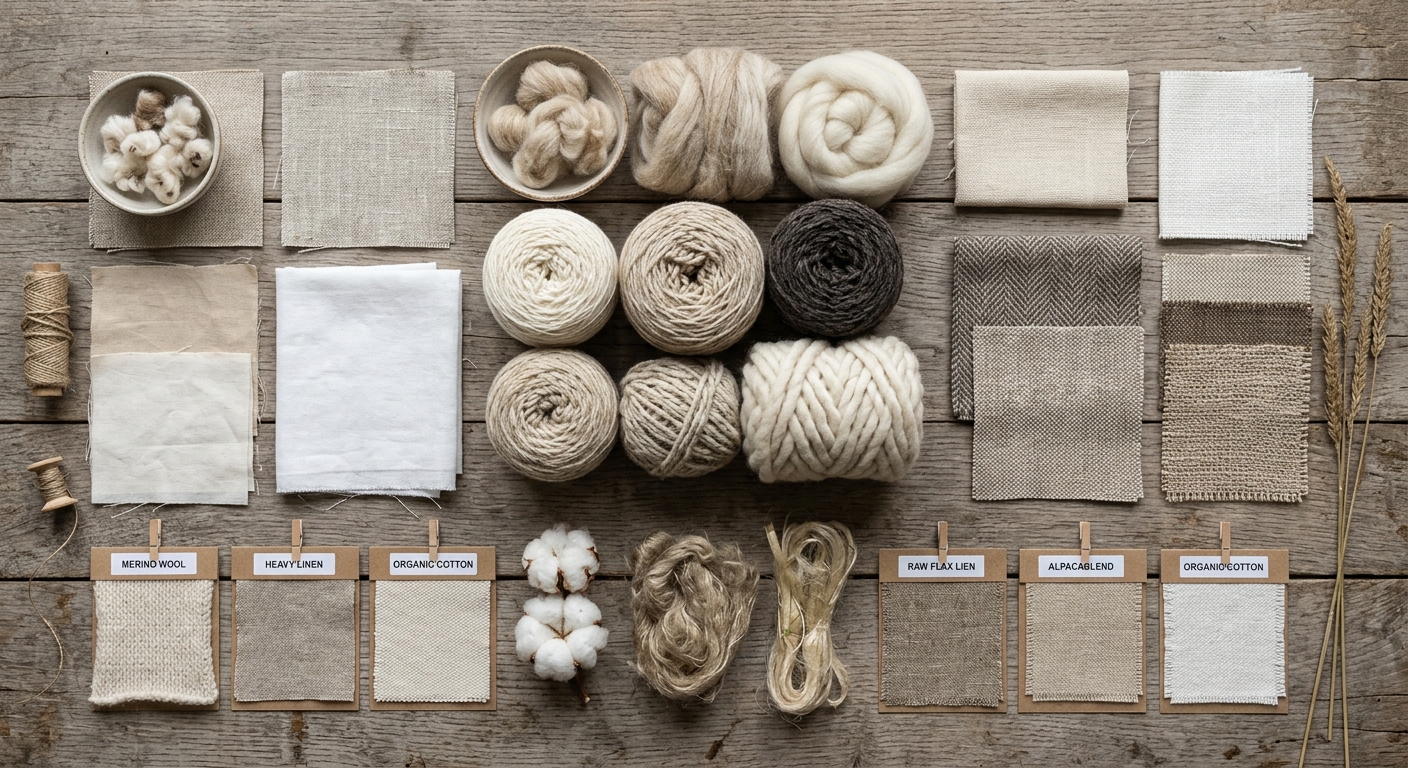
A complete guide to the natural fibers we use at Vaino Wear — their properties, benefits, and best uses.
Read More→