traditionknittingestonia
The Art of Estonian Hand Knitting: A Tradition Worth Preserving
Discover the rich history of Estonian hand knitting, from ancient patterns to modern interpretations of this beloved craft.
Read More→
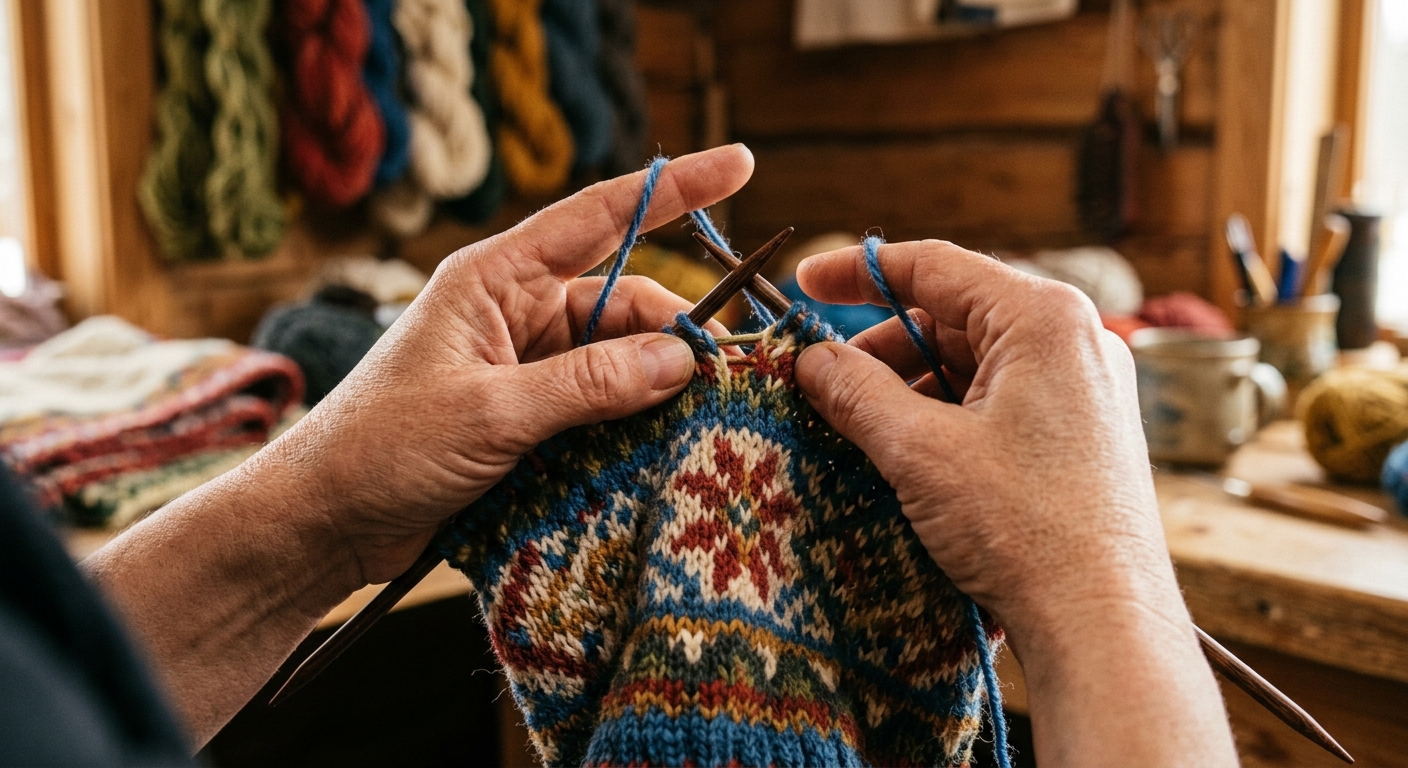
Long before knitwear became a fashion statement, it was a survival skill passed from mother to daughter across the Estonian countryside and islands. Every region developed its own visual language of stitches, and those patterns still show up in handmade sweaters, mittens and shawls today. If you have ever wondered why a pair of mittens from Estonia looks so different from one knitted in Norway or Iceland, the answer lies in centuries of local tradition, not a modern design trend.
Estonian knitting developed island by island and parish by parish. Farmers and fishing families needed warm, durable garments for a cold Baltic climate, but they also used their needles to mark identity. A woman's home parish, marital status, and even her family's standing could be read from the colors and motifs in her mittens. This is one of the reasons Estonian handicrafts are studied by textile historians today: the patterns were never just decoration, they were a form of communication stitched in wool.
Two traditions stand out above the rest, and both are still very much alive: Haapsalu lace shawls and Kihnu mittens.
Haapsalu, a resort town on Estonia's west coast, gave its name to a style of lace knitting that dates back to the 19th century. Local women began knitting fine wool shawls to sell to visiting spa guests, and the craft grew into one of the country's most recognized textile traditions.
What makes Haapsalu lace remarkable is the patience it demands. A single shawl can take a skilled knitter over a hundred hours. That is also why authentic, hand-knitted lace pieces carry real value: they represent time and skill that cannot be replicated by a machine.
Kihnu is a small island in the Gulf of Riga where women have kept traditional dress and handicrafts alive longer than almost anywhere else in Estonia. Kihnu knitting could not look more different from the airy lace of Haapsalu. It is bold, graphic, and built for practical, everyday warmth.
Kihnu mittens are dense and tightly knitted, which makes them genuinely warm rather than just decorative. They were built to be worn on a windswept island in winter, not admired from a shelf.
Haapsalu and Kihnu are the best known Estonian knitting traditions, but they are far from the only ones. Muhu and Saaremaa each have their own mitten and sock patterns, often featuring bold diagonal stripes and roosters, a folk symbol believed to ward off evil. Setu handicrafts in the southeast lean on different color palettes and embroidery-influenced motifs. Even within a single island, pattern details could vary from village to village.
This regional diversity is part of why traditional Estonian knitting patterns are considered such a rich part of the country's cultural heritage. It is not one national style, but dozens of local dialects in wool.
If you look closely at traditional Estonian knitwear, a few recurring elements show up again and again:
Understanding this symbolism changes how you see a handmade piece. A patterned mitten is not just a cold-weather accessory, it is a small, wearable record of where it was made and who made it.
As traditional patterns have grown popular internationally, machine-made imitations have followed. If you are shopping for the real thing, a few details tell you what you are actually buying:
None of this means a piece has to look old-fashioned. Traditional stitch patterns work just as well on a modern sweater silhouette as they did on a 19th century shawl, which is exactly why they have lasted this long.
These patterns survived industrialization, war, and decades of Soviet occupation largely because they were kept alive at home, one pair of needles at a time. At Vaino Wear, based in Loksa, Estonia, we care about that continuity. Our sweaters, mittens, hats, and socks are still made by hand, often drawing on the same stitch structures and color logic that shaped Haapsalu lace and Kihnu mittens generations ago, whether we are working with soft merino wool or warm alpaca.
Choosing a hand-knitted piece today is a small way of keeping a centuries-old craft in use rather than in a museum case. It also means you get something genuinely made to last, stitch by stitch, the way Estonian knitters have always worked.
If you want to bring a piece of this tradition into your own wardrobe, explore our full collection of handmade Estonian knitwear at www.vainowear.com/en/products.
Discover the rich history of Estonian hand knitting, from ancient patterns to modern interpretations of this beloved craft.
Read More→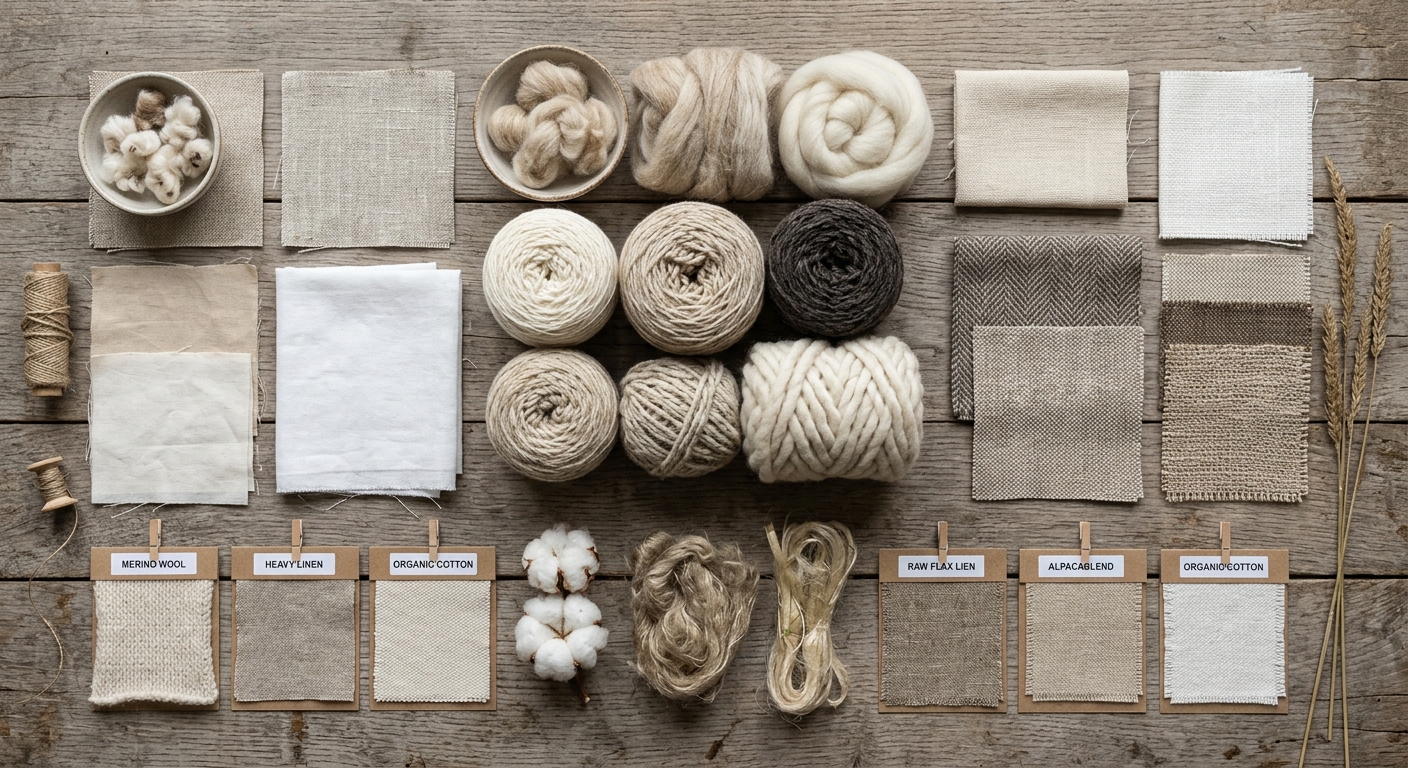
A complete guide to the natural fibers we use at Vaino Wear — their properties, benefits, and best uses.
Read More→