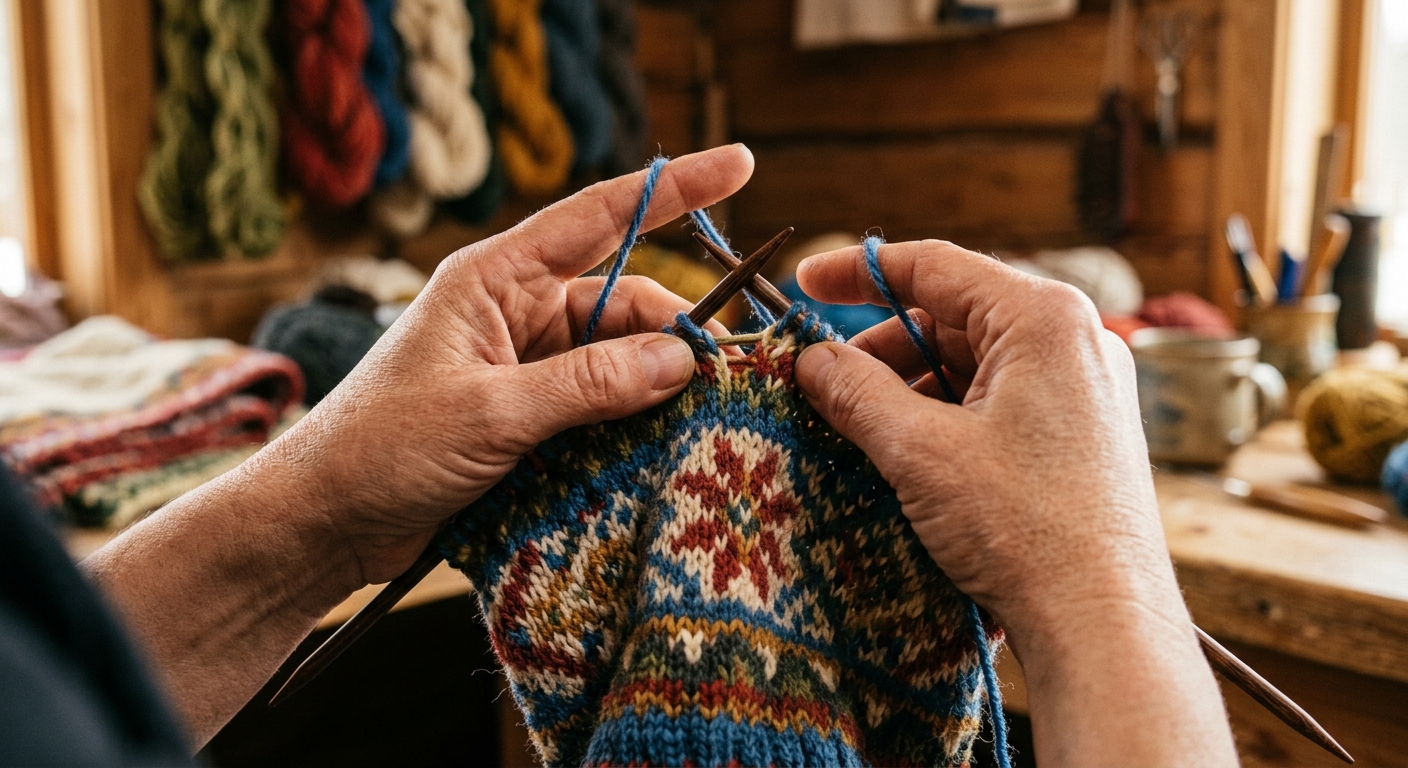
traditionknittingestonia
The Art of Estonian Hand Knitting: A Tradition Worth Preserving
Discover the rich history of Estonian hand knitting, from ancient patterns to modern interpretations of this beloved craft.
Read More→
Yes, wool socks are worth it, especially if your feet get cold, damp or sweaty in winter. Wool keeps insulating when it is slightly damp, pulls moisture away from the skin and resists odour, so a good pair stays warm and fresh through a long day. Cotton does the opposite: it soaks up sweat, holds it against your foot and chills you. A hand-knitted pair costs more than a supermarket multipack, but it outlasts several of them and makes winter genuinely more comfortable.
Below we explain why wool works so well on feet, which fibre to choose, when knee socks make sense, and how to tell a well-made pair from one that will wear through by February.
Feet sweat more than almost any other part of the body. Even on a freezing day, a foot inside a boot produces moisture, and what happens to that moisture decides whether your toes stay warm.
Cotton fibres absorb water and then hold it. A damp cotton sock loses most of its insulation and starts drawing heat from your skin. That is why people often feel coldest in the afternoon, after hours of walking, rather than first thing in the morning.
Wool behaves differently. Each fibre can take up a surprising amount of water vapour inside its core while the surface still feels dry. The crimp in the fibre traps tiny pockets of still air, and those pockets keep working even when the sock is not perfectly dry. Wool also releases a little heat as it absorbs moisture, which is one reason a wool sock feels comfortable rather than clammy.
There are a few practical bonuses too:
If you want the broader science of wool against synthetics, our post on wool vs synthetic clothing goes into more detail.
Not all wool feels or performs the same on your feet. The right choice depends on how you will wear them.
Merino wool is fine and soft, so it suits people who find ordinary wool scratchy. It is the best everyday sock for wearing inside shoes, at the office or as a base layer under a thicker pair. Merino is a little less hard-wearing than coarser wool, so look for a firm, tight knit.
Traditional Estonian wool is springier and more robust. It makes the classic thick house sock and the outdoor sock you wear inside winter boots. It is warm, durable and holds its shape well, and the slightly rustic texture softens with wear and washing.
Alpaca is warmer than sheep's wool for its weight and has a silky, slightly fuzzy feel. It is excellent for very cold feet, for sitting still (fishing, watching sports, long train rides) and for house socks on cold floors. Pure alpaca can stretch, so it often works best blended with wool.
A simple rule: merino for daily wear and sensitive skin, traditional wool for boots and hard use, alpaca for maximum warmth while resting.
Knee socks are not just a style choice. Keeping your calves warm helps keep your feet warm, because the blood travelling down to your toes is not being cooled on the way. In a Nordic winter, especially with a skirt, a dress or trousers that ride up when you sit, a pair of wool knee socks makes a real difference.
Knee socks are worth considering if you:
Shorter socks are better for everyday shoes, for warmer indoor spaces and for anyone who finds the extra fabric too warm. Many people in Estonia keep both: knee socks for the deep cold of January and February, shorter pairs for the rest of the year. If you are planning a whole winter outfit, our guide on what to wear in Estonia in winter shows how socks fit into the rest of the layers.
A sock takes more abrasion than any other garment you own. Heels and toes rub against shoes with every step, so construction matters as much as the fibre. When you choose a pair, look at these details:
Handmade socks also have a quiet advantage: they can be darned. A small hole at the heel is a twenty-minute repair, not the end of the sock. Families in Estonia have kept the same pairs going for many winters this way.
A pair of hand-knitted socks takes many hours to make, often a full day or more of knitting for a single pair of knee socks. That is the main reason they cost more than factory socks, and it is also the reason they last longer: every stitch is placed with care, the tension is checked by hand, and heels are shaped to fit a real foot.
Think about cost per wear rather than the price tag. A cheap cotton-blend pair might last one season before the heel goes thin. A sturdy hand-knitted wool pair, worn a few times a week and washed gently, can easily last five winters or more, and can be repaired when it finally wears. Add the comfort of warm, dry feet every day, and the maths usually favours wool.
Wool socks are also one of the most useful gifts you can give. Almost everyone has cold feet at some point in winter, they are easy to size, and they get worn, not stored in a drawer.
Wool socks do not need much. Air them between wears, since wool freshens itself well. When they need a wash, use cool water and a wool detergent, either by hand or on a gentle wool cycle, and dry them flat away from radiators. Never tumble dry. Turning them inside out before washing reduces pilling on the outside. That is really all there is to it.
At Vaino Wear we knit wool socks and knee socks by hand in Loksa, on the north coast of Estonia, using merino, traditional wool and alpaca. Each pair is made to keep feet warm through a real Nordic winter, and to last long enough to become an old favourite.
Browse our hand-knitted socks, knee socks and other wool knitwear and give your feet the winter they deserve.
Discover the rich history of Estonian hand knitting, from ancient patterns to modern interpretations of this beloved craft.
Read More→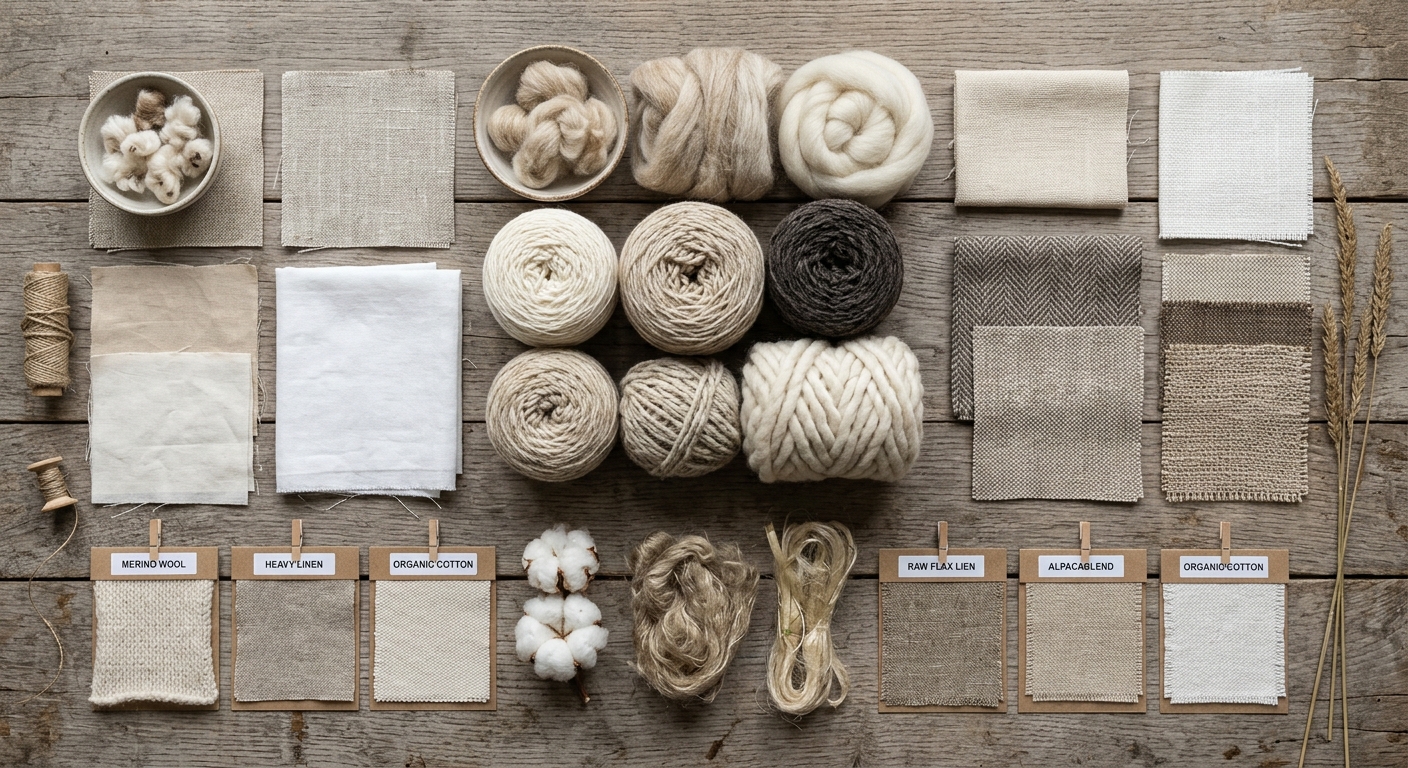
A complete guide to the natural fibers we use at Vaino Wear — their properties, benefits, and best uses.
Read More→