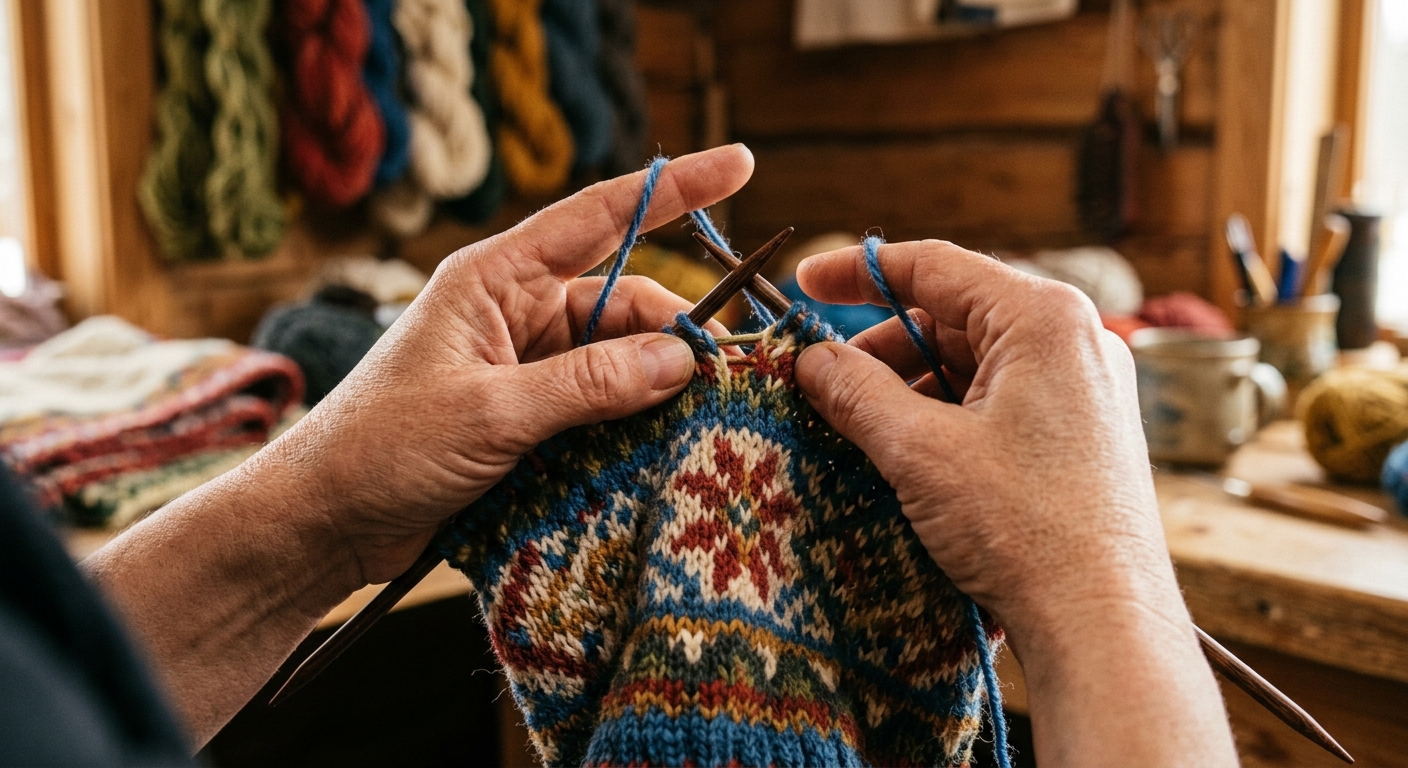
traditionknittingestonia
The Art of Estonian Hand Knitting: A Tradition Worth Preserving
Discover the rich history of Estonian hand knitting, from ancient patterns to modern interpretations of this beloved craft.
Read More→
Wondering what to wear in Estonia in winter? Dress in three layers: a thin merino wool base layer, a thick wool sweater as your warm middle, and a windproof coat on top. Add a wool hat, wool mittens, warm wool socks and boots with a grippy sole, plus a reflector, which Estonian law requires after dark. That covers almost every day from December to March, whether you are walking around Tallinn's Old Town or visiting a farm on the north coast.
We knit in Loksa, a small town on the Gulf of Finland, and we spend every winter outdoors in the clothes we make. This guide is what we tell friends who are coming to visit.
On paper, Estonian winter is not extreme. Average temperatures in Tallinn sit around -3 to -5°C in January and February, and a cold snap can push them down to -15°C or -20°C for a week. What surprises visitors is not the number on the thermometer. It is three other things.
The weather also changes quickly. A bright, frosty morning can become wet snow by lunch, then freeze again overnight into ice. So the goal is not one huge jacket. It is a set of layers you can open, close and remove as you go between the street, a heated café and a bus.
Every Nordic winter guide recommends layering, but the material matters as much as the number of layers.
Base layer: merino wool. This is the layer touching your skin, and its job is to move sweat away so you stay dry. Cotton is the worst choice here, because it holds moisture and then chills you the moment you stop walking. Fine merino feels soft, stays warm when slightly damp and does not start to smell after a day of wear, which matters when you are travelling with a small bag. A thin long-sleeved merino top and merino leggings or long underwear are enough.
Middle layer: a real wool sweater. This is the insulation. A dense hand-knitted wool sweater traps a lot of still air in its fibres and in the knit itself, and it keeps insulating even when the snow on your shoulders melts. Locals often wear a thick sweater instead of a fleece, partly for warmth and partly because it looks right indoors too. If you want the science of why wool outperforms polyester here, our post on wool vs synthetic clothing explains it in detail.
Outer layer: wind and wet protection. A windproof, water-resistant coat or parka that reaches at least the hips. It does not need to be very thick if your sweater is doing its job. Many Estonians wear a wool coat in town and a technical shell for the countryside.
The beauty of this system is control. Walk into a museum or a warm restaurant, open the coat, and the merino layer handles the sweat. Step back outside, close it up, and the sweater is already warm.
Most people who say they were cold in Estonia were actually cold at the edges.
Hats. A wool hat that covers your ears is not optional in January. Choose a close knit, ideally with a double-layered brim or a fleece-free wool lining. On very windy or very cold days a balaclava or a wide knitted headband under the hat protects your cheeks, ears and neck far better than a scarf that keeps slipping.
Mittens over gloves. Mittens keep your fingers together, so they share warmth, and they are noticeably warmer than gloves at the same thickness. Estonians have knitted patterned mittens for centuries for exactly this reason. Many people carry thin gloves for using their phone and wear wool mittens over them. Our guide to whether mittens are warmer than gloves covers fit and materials.
Socks and boots. Wear wool socks, not cotton, and bring a spare pair for long days. Knee-length wool socks are a local habit worth copying: they keep your shins warm under jeans, which are otherwise very cold in the wind. Boots should be insulated and waterproof, with a deep, soft rubber sole. Tallinn's Old Town is cobblestone, and cobblestones under ice are slippery. Leave heels and smooth leather soles at home.
Here is a practical list for a week in Estonia between December and March.
The reflector is a real rule, not a souvenir. Estonian traffic law requires pedestrians to wear a reflector in the dark on poorly lit roads, and police do give fines. Locals clip them to their coat or bag from October to April.
City days in Tallinn or Tartu. You will go in and out of warm buildings constantly, so layers you can open matter more than maximum warmth. A merino base, a wool sweater, a smart coat, hat and mittens is plenty for most of the season.
Christmas markets and evening walks. Standing still is colder than walking. Add a second pair of socks or knee socks, and a headband under your hat. Hot drinks help, but warm feet help more.
Bog walks, forests and the coast. Lahemaa National Park, the Viru bog boardwalk and the coast near Loksa are beautiful in snow, and very exposed. Wear your full layer system, a balaclava if it is windy, and boots you can keep dry. Carry a spare base layer in your bag.
Sauna culture. Many Estonian winter trips end in a sauna. Bring a wool hat for the sauna too. Locals wear a felted wool sauna hat to protect their head from the heat, and it is one of the more charming habits you can bring home.
You can find thermal layers anywhere, but Estonian knitwear is made for this exact climate. Generations of knitters here have worked out which yarns, stitches and shapes stay warm in wet Baltic cold, and that knowledge lives in the pieces we make in Loksa: dense wool sweaters, merino and alpaca layers, patterned mittens, hats, headbands, balaclavas and knee socks. Each one is knitted by hand, made to be worn for many winters rather than one.
If you are planning a winter trip, or you live somewhere with damp, windy cold and want clothes that actually cope with it, browse our handmade wool knitwear and build your layers from the inside out. We are always happy to help with sizing or to suggest what to pack for the season you are visiting.
Discover the rich history of Estonian hand knitting, from ancient patterns to modern interpretations of this beloved craft.
Read More→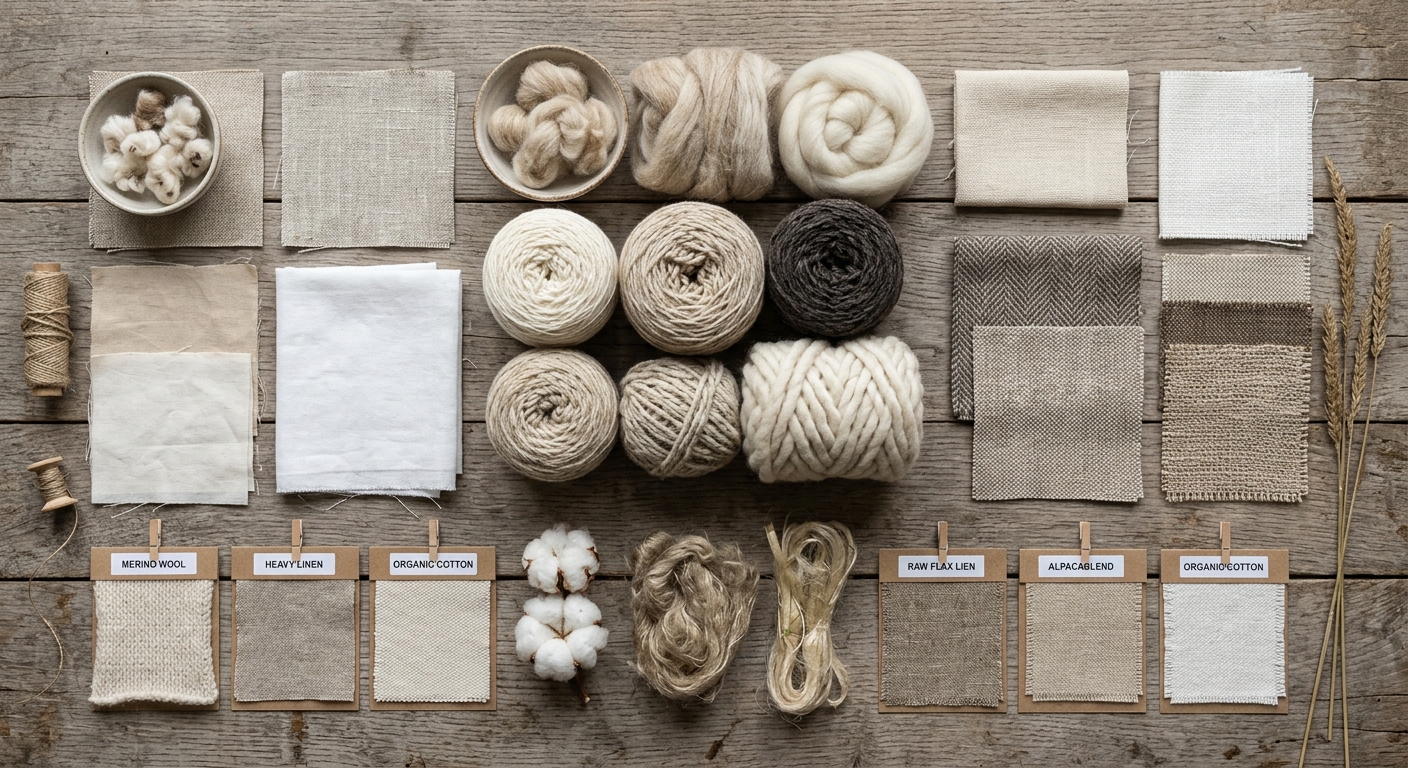
A complete guide to the natural fibers we use at Vaino Wear — their properties, benefits, and best uses.
Read More→