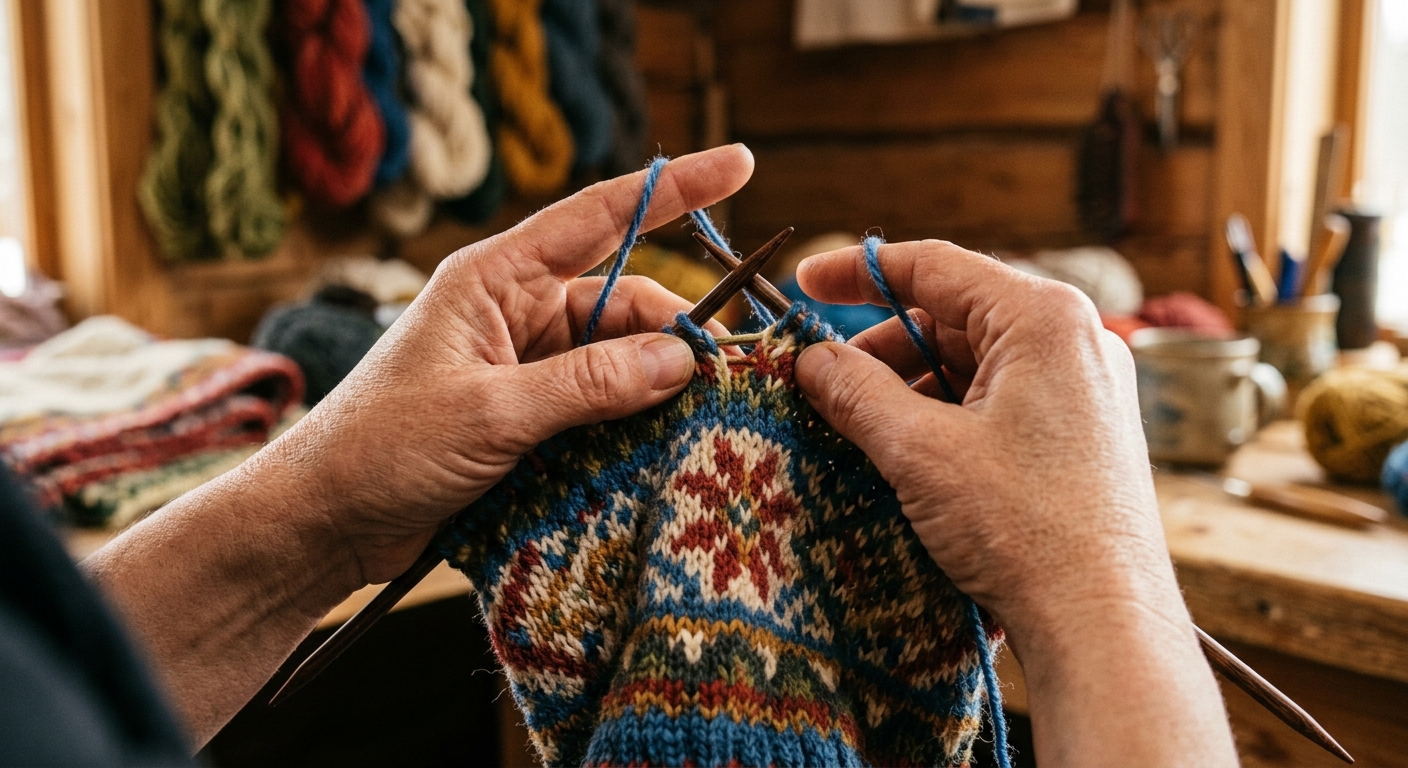
traditionknittingestonia
The Art of Estonian Hand Knitting: A Tradition Worth Preserving
Discover the rich history of Estonian hand knitting, from ancient patterns to modern interpretations of this beloved craft.
Read More→
The short answer: measure a sweater you already own and love, then compare its flat measurements to the size chart. Do not start from your body measurements alone. A hand-knitted wool sweater is made with ease built into it, so your chest measurement and the sweater's chest measurement are never meant to match. Get the chest right first, and body length, sleeve length and shoulder width become much easier to judge.
This matters more with handmade knitwear than with factory clothing. Every Vaino Wear piece is knitted by hand in Loksa on the northern coast of Estonia, so the sizes are real garment measurements rather than a label borrowed from a high street chain. A medium here means a specific chest circumference in centimetres, and that number is what you should be shopping with.
The fastest route to the right size does not involve a measuring tape around your body at all. Go to your wardrobe, find the sweater you reach for most often in November, and lay it flat on a table or a bed.
Smooth it out without stretching it. Then take three numbers:
Write them down. These three numbers describe a fit you already know you like, on your own body, and that is far more reliable than an idea of what size you usually wear. Sizing varies wildly between brands and between countries. A sweater that genuinely fits you does not.
One caution: compare like with like. If your reference sweater is thin cotton jersey and you are buying a chunky wool pullover, the wool will sit differently on the shoulders and take up more room under a coat. A thick knit needs slightly more chest room than a fine one in order to hang properly rather than pull.
Once you have your reference numbers, four measurements decide whether a knitted sweater will feel right.
If a listing gives you these four numbers, you have everything you need. If you are unsure about a specific piece, ask. A small workshop can go and measure the actual sweater for you, which is one of the quiet advantages of buying from the person who made it.
Ease is the difference between your body measurement and the finished garment measurement, and it is the reason a 96 cm chest does not want a 96 cm sweater.
So if your chest measures 96 cm and you want a classic fit, you are looking for a sweater with a finished chest of roughly 101 to 106 cm. If you plan to wear it over a flannel shirt through an Estonian winter, aim at the upper end of that range, or step up into a relaxed fit.
Knitted fabric stretches, which is why a sweater with slight negative ease can still be wearable. But stretch borrowed to cover a fit problem always shows. The stitches open up, the pattern distorts, and the sweater loses the shape the knitter built into it.
Two sweaters knitted to identical measurements in different yarns will not feel the same when you put them on.
Merino is springy and elastic. It holds its shape well and recovers after stretching, which makes it forgiving if you fall between two sizes. It is also the right choice when you want a closer fit against the skin. There is more on why merino behaves the way it does if you want the detail.
Alpaca is heavier and drapes rather than springs back. It relaxes and grows a little with wear and body heat, so an alpaca piece that feels exactly right in the morning can feel slightly roomier by evening. If you are choosing between two sizes in alpaca, the smaller one is usually correct. We covered how alpaca differs from ordinary wool in an earlier article.
Traditional Estonian wool is sturdier and denser than either. It softens over years rather than weeks and holds its measurements very faithfully. Size it as the chart says and trust it.
Linen and cotton behave differently again. They have almost no stretch, which means ease matters more rather than less. Take the chest measurement seriously and do not count on the fabric to give.
Sweaters get the most attention, but most of what people buy from a knitter is smaller, and small pieces have their own rules.
Children's knitwear is the one place to size up rather than down. A child grows through a sweater in a season, and a hand-knitted one is built to last several. An extra couple of centimetres of sleeve, turned back at the cuff, can buy a whole year of wear.
It happens often, and there is a simple way through it.
Go up a size if you like layering, if you are buying a thick winter sweater, if the yarn is a sturdy traditional wool, or if your shoulders are broader than your chest measurement suggests.
Go down a size if the piece is alpaca or an alpaca blend, if you want a fitted silhouette, or if you are buying fine merino to wear close to the skin.
And when it is genuinely too close to call, write to us. One of the honest pleasures of buying handmade is that a real person can go and measure the piece before it is packed and posted. That is not something a warehouse can offer.
Ready to find your size? Browse the full collection of hand-knitted sweaters, mittens, hats and socks at vainowear.com/products, where every listing carries its real garment measurements. If you are still not certain which size suits you, send us a message before ordering and we will help you choose.
Discover the rich history of Estonian hand knitting, from ancient patterns to modern interpretations of this beloved craft.
Read More→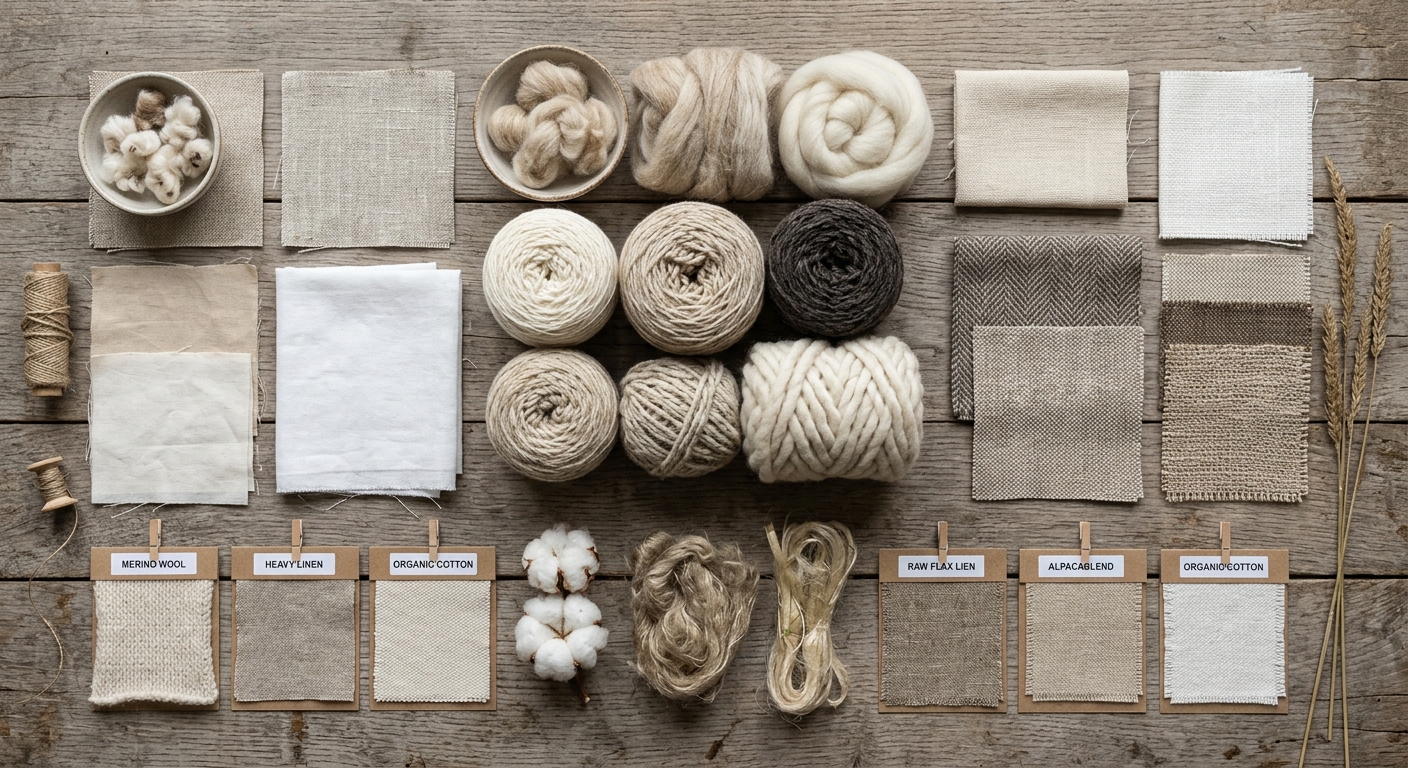
A complete guide to the natural fibers we use at Vaino Wear — their properties, benefits, and best uses.
Read More→