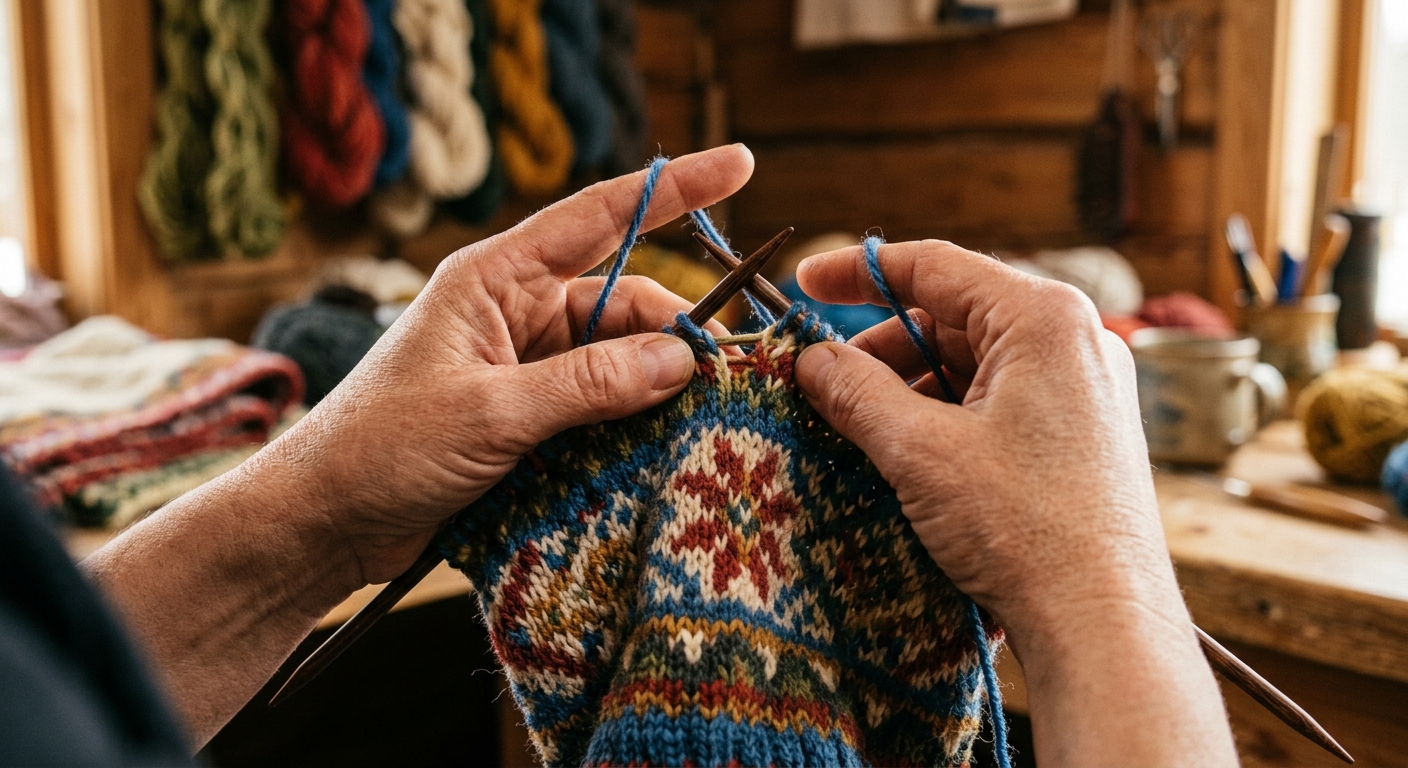
traditionknittingestonia
The Art of Estonian Hand Knitting: A Tradition Worth Preserving
Discover the rich history of Estonian hand knitting, from ancient patterns to modern interpretations of this beloved craft.
Read More→
Is a wool balaclava worth it? For anyone who spends real time outside in a northern winter, yes. A wool balaclava covers your head, ears, neck and most of your face in one piece, so there are no gaps for wind to find between hat and scarf. Wool keeps you warm even when your breath dampens the fabric around your mouth, it does not hold odour the way synthetics do, and a good hand-knitted one lasts for many winters. The real question is not whether to own one, but which kind suits the way you live.
Below we explain what a balaclava does that a hat and scarf cannot, how merino, traditional wool and alpaca compare for face wear, the styles to choose between, and how to get the fit right.
A hat and scarf leave two weak spots: the back of the neck and the band of skin between your jaw and your ears. On a still day you barely notice. In a sea wind on the coast at Loksa, or on a bike in January, that is exactly where the cold gets in.
A balaclava closes those gaps because it is one continuous tube of knitting from the crown of your head down to your collarbones. It also stays put. A scarf slips and needs retying every time you take your bag off your shoulder. A balaclava moves with you.
The name comes from the Crimean War. British soldiers outside the town of Balaklava in the winter of 1854 wore knitted hoods sent from home, and the name stuck. In Estonia and across the Nordic countries the same idea is much older. Knitted hoods and caps that covered the neck were ordinary winter wear long before anyone gave them a military name.
Today people wear them for:
Your face is more sensitive than your arms or legs, so fibre matters more in a balaclava than in a sweater.
Merino has the finest fibres of the three, which means it feels soft against cheeks, lips and the neck. It moves moisture away from the skin well, so the area in front of your mouth does not turn clammy as quickly. It is the best choice for people who find ordinary wool scratchy and for active use like skiing or brisk walking. If you want the longer story on this fibre, read our guide to merino wool benefits.
Classic Estonian sheep's wool is thicker, sturdier and more wind resistant. It traps more air, so it is warmer at rest, and it stands up to years of hard wear. It can feel slightly rougher on the face, though many people stop noticing after the first few wears as the fibres soften. It suits outdoor work, long waits in the cold and anyone who runs warm and wants durability more than softness.
Alpaca is very warm for its weight and has a soft, slightly silky feel. It does not have the same springy stretch as sheep's wool, so pure alpaca balaclavas can feel looser around the face. Blends with merino or wool give you the warmth of alpaca with better shape.
A quick rule of thumb: merino for comfort and movement, traditional wool for wind and toughness, alpaca blends for maximum warmth with little weight.
Balaclavas come in a few shapes, and the right one depends on the coldest conditions you actually face.
If you only buy one, an open face or convertible style covers most real winter days in Estonia. Many people pair it with a separate headband or hat on milder days and add the balaclava when the wind turns.
A balaclava that is too tight presses on your ears and pulls at your eyes. One that is too loose lets cold air in and slides across your face when you turn your head. Here is what to check.
If you wear glasses, try an open face style and pull the fabric down slightly below your nose. Warm breath pushed upward is what fogs lenses.
For more on putting the whole outfit together, our guide to what to wear in Estonia in winter shows how a balaclava fits into the three-layer system with sweaters, mittens and knee socks.
Most balaclavas in sports shops are machine-knitted from thin synthetic or blended fabric. They work well as a light layer under a helmet, but they are not the same garment as a hand-knitted wool one.
A hand-knitted balaclava is shaped by someone who can adjust the stitches around the face, the crown and the neck, rather than relying on a single stretch tube. The knit is denser, so it blocks more wind. Real wool also handles moisture from your breath far better than polyester, and it does not start to smell after a week of daily use. You can simply air it overnight.
There is also how long it lasts. A well-made wool balaclava, worn every winter and washed only when needed, will keep its shape for years. If a small hole appears, it can be darned. Over five or six winters, the cost per wear is lower than replacing cheap synthetic ones every season.
At Vaino Wear our balaclavas are knitted by hand in Loksa, on the north coast of Estonia, where the sea wind is a constant winter companion. We make them in natural fibres so they are comfortable against the face and genuinely warm, not just a thin windproof layer.
Because a balaclava sits close to your mouth and nose, it needs a little more attention than a hat, but not much.
A wool balaclava is one of those simple pieces that changes how a cold day feels. Pick merino if comfort and movement matter most, traditional wool if you need wind protection and durability, and an open face or convertible style if you want one balaclava for every kind of winter day.
Browse our hand-knitted balaclavas, hats, mittens and other winter knitwear, all made by hand in Estonia, at vainowear.com/en/products.
Discover the rich history of Estonian hand knitting, from ancient patterns to modern interpretations of this beloved craft.
Read More→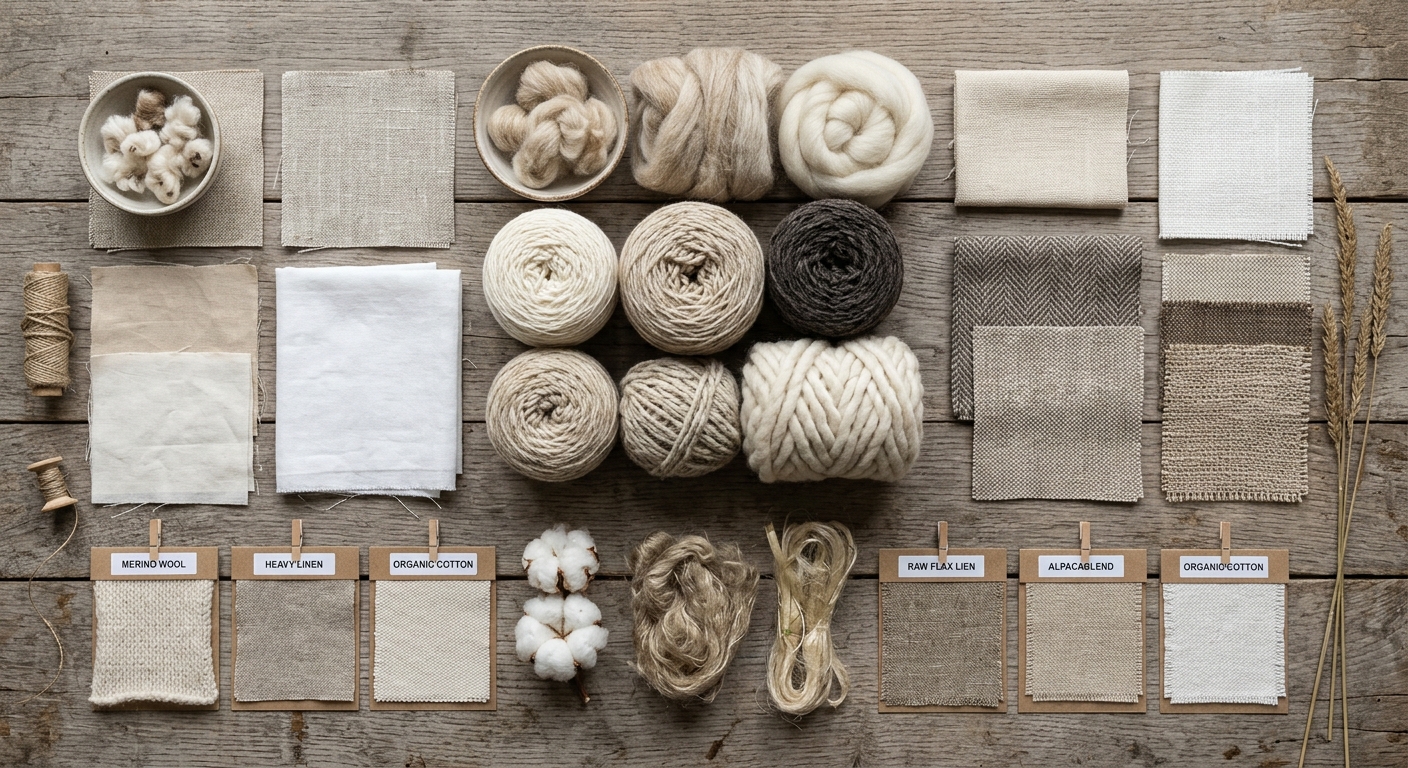
A complete guide to the natural fibers we use at Vaino Wear — their properties, benefits, and best uses.
Read More→